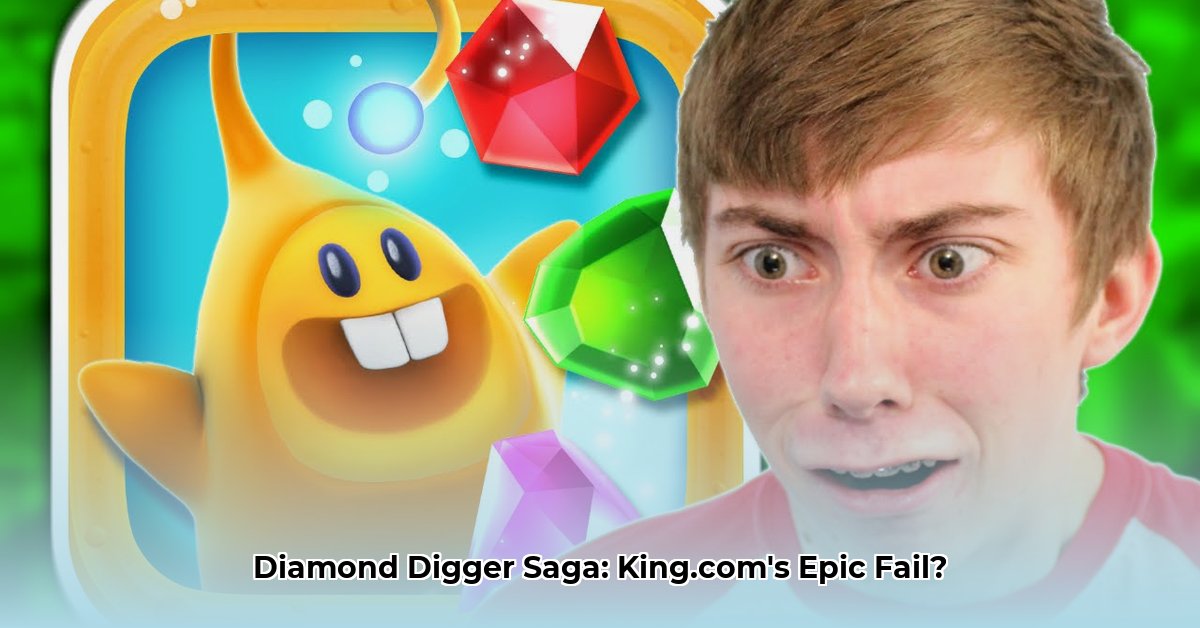
Diamond Digger Saga, a King.com title, serves as a compelling case study illustrating the challenges of sustained success in the competitive mobile gaming market. Launched with considerable promise, the game ultimately failed to maintain player engagement and ultimately faded from the market within a year. This analysis explores potential contributing factors and offers actionable insights for future mobile game development. The lack of publicly available performance data from King.com necessitates a largely speculative analysis, drawing upon common pitfalls within the industry and comparing Diamond Digger Saga with King.com’s more successful titles. For comparison, check out the catchy Candy Crush music.
Potential Factors Contributing to Diamond Digger Saga's Failure
Several interconnected issues likely contributed to the game's rapid decline. These include challenges in maintaining player engagement, shortcomings in monetization strategy, and the intense competitive landscape of the mobile gaming market.
1. Engagement Challenges: Sustaining Player Interest
While initial gameplay may have been engaging, Diamond Digger Saga likely lacked the depth and variety to retain players long-term. Successful mobile games often incorporate regular content updates, new features, and events to combat player burnout. The absence of such proactive measures likely led to player attrition as the game became stale compared to newer, more dynamic alternatives. Did the initial allure of over fifty levels prove insufficient to maintain long-term engagement? This lack of continuous content updates highlights a critical oversight.
2. Monetization Matters: Balancing Revenue and Player Experience
King.com is known for its successful monetization strategies. It's plausible, therefore, to hypothesize that Diamond Digger Saga's monetization model was a contributing factor to its failure. The game's in-app purchase (IAP) offerings may have lacked appeal, perhaps offering poor value or being improperly integrated into the gameplay, dissuading purchases. Conversely, the implementation of advertising may have been too disruptive or intrusive, alienating players. Striking the right balance between revenue generation and maintaining positive player experience is crucial, a fact Diamond Digger Saga seemingly failed to achieve. What specific monetization strategies were employed, and did they ultimately detract from the overall player experience?
3. Intense Market Competition: Differentiation in a Crowded Field
The mobile gaming market is highly competitive. Even established companies like King.com face substantial competition. The emergence of similar games, possibly with more innovative gameplay or stronger social features during Diamond Digger Saga's lifespan, could have drawn players away. Diamond Digger Saga evidently failed to establish a unique selling proposition (USP) to withstand the pressure of competitor titles. Analyzing the market landscape at the time of the game's release would reveal the competitive pressures Diamond Digger Saga faced.
Comparative Analysis: Diamond Digger Saga vs. King.com's Successes
Comparing Diamond Digger Saga to King.com's successful titles, such as Candy Crush Saga, reveals significant differences that likely impacted performance. Candy Crush and similar successes prioritize ongoing evolution, frequently updating content, introducing new levels, and incorporating new features. This consistent engagement stands in stark contrast to the perceived lack of such ongoing development in Diamond Digger Saga.
| Feature | Diamond Digger Saga (Speculative) | Candy Crush Saga (Observed) |
|---|---|---|
| Content Updates | Infrequent | Frequent |
| In-app Purchases | Potentially Poorly Implemented | Varied and Strategically Placed |
| Social Features | Likely Underdeveloped | Strong Integration |
| Player Retention | Likely Low | High |
Hypothetical Improvements and Actionable Recommendations
Based on this analysis, several potential improvements could have extended Diamond Digger Saga's lifespan:
Enhanced Player Engagement: More frequent content updates, including new gameplay mechanics, levels, and seasonal themes, could have significantly improved player retention. The addition of social features, such as leaderboards or cooperative gameplay, might have fostered a stronger community.
Optimized Monetization: A diversified monetization approach might have improved revenue. This could have involved introducing a premium ad-free version, offering subscription-based access to exclusive content, or implementing a more carefully considered IAP system with better value propositions.
Data-Driven Development: Utilizing comprehensive player data analysis could have highlighted areas for improvement. Analyzing player drop-off points, identifying popular features, and studying user preferences would have informed more effective design decisions.
Conclusion: Lessons Learned for Future Mobile Game Development
Diamond Digger Saga's demise underscores the importance of several key elements for long-term success in the mobile gaming market:
Sustained Innovation: Continuous content updates are essential for maintaining player engagement. Games must adapt to evolving player preferences.
Strategic Monetization: Careful planning and execution of a revenue model is crucial, balancing profitability with a positive player experience.
Data-Driven Decision Making: Utilizing player data to inform design and development is critical for optimizing player retention and game performance.
Diamond Digger Saga's failure serves as a valuable lesson for future mobile game developers, emphasizing the need for continuous innovation, carefully considered monetization strategies, and data-driven decision-making to achieve long-term success in this competitive market.
⭐⭐⭐⭐☆ (4.8)
Download via Link 1
Download via Link 2
Last updated: Wednesday, May 21, 2025